Can You Import Pork into Qatar? The Rules Are More Interesting Than You Think Updated: September 2026
If you search for information about importing pork into Qatar, you will quickly find two completely different answers. One says pork is banned. The other says pork is available in Qatar. Surprisingly, both statements contain part of the truth. The real answer is more nuanced — and for restaurant owners, food importers and F&B operators, that distinction matters. Qatar does not treat pork like an ordinary imported food product. Pork and pork products sit within a tightly controlled regulatory framework, and the normal commercial food-import route should not be confused with the special channel through which pork products are made available in the country. Here is how the system actually works.
Is pork banned in Qatar?
Not quite — at least, “pork is completely banned in Qatar” is too simplistic.
Qatar's General Authority of Customs maintains separate lists for prohibited and restricted goods. In its restricted-goods tariff database, a number of swine products appear under specific HS codes and are subject to control by the General Authority of Customs and, for some products, the Ministry of Public Health's Ports Health and Food Control Section.
This distinction is important. A restricted product is not the same thing as a product that any licensed restaurant or food importer is free to bring into Qatar. And this is where much of the online confusion starts.
The GCC Guide for Control on Imported Foods, published on the Qatar General Authority of Customs website, states that foods considered religiously forbidden under applicable GSO technical regulations are prohibited from entry through the ordinary imported-food framework.
The same official guidance identifies pork as an example of an animal source that is not Halal. In practical terms, therefore, a normal restaurant or ordinary food importer should not assume that having a food-import licence allows it to commercially import pork into Qatar. There is a separate, controlled route.
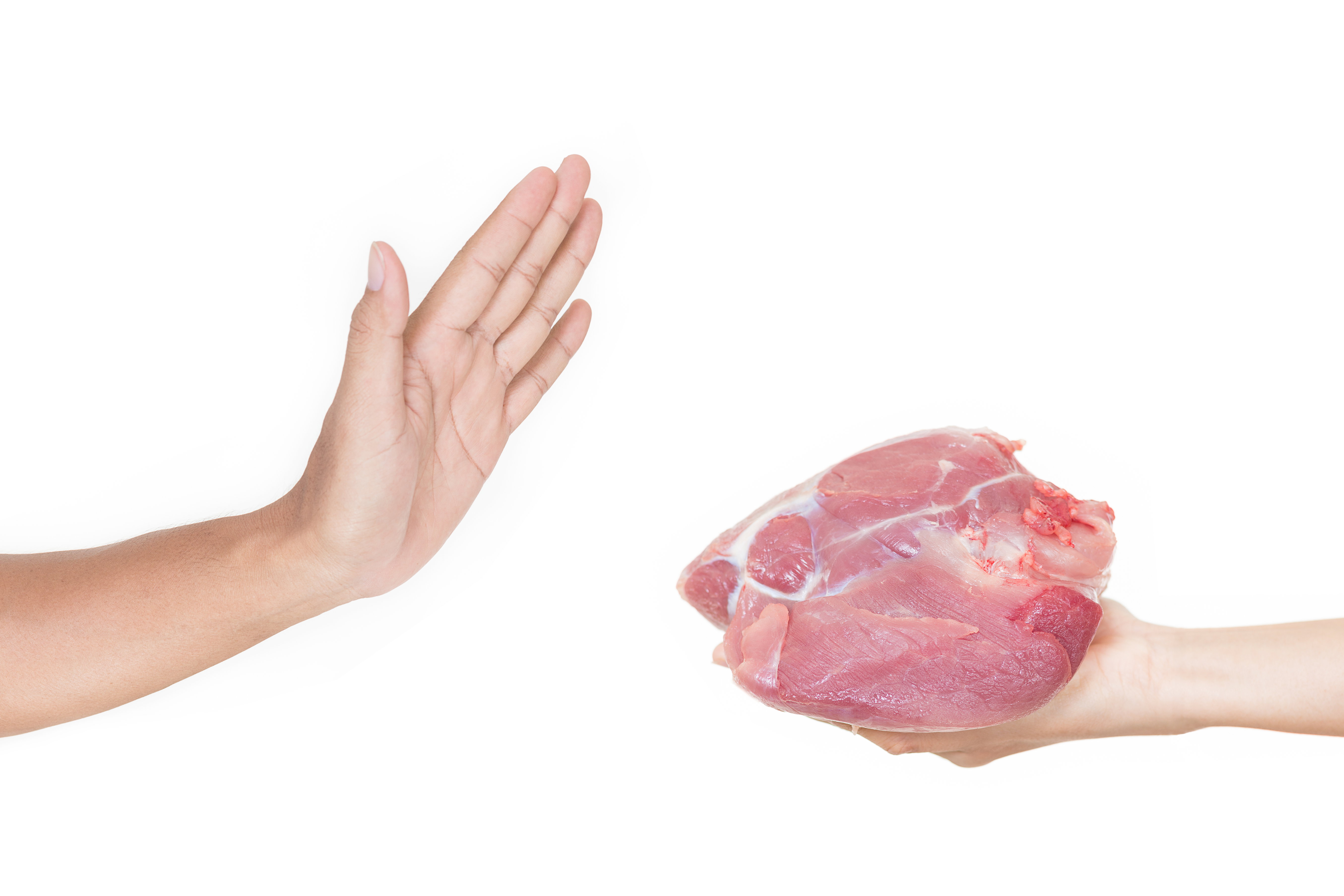
So how is pork available in Qatar?
This is the question that makes the subject interesting. People living in Qatar may already know that pork products can legally be obtained under controlled conditions. The current U.S. Department of Commerce country guide for Qatar states that Qatar Distribution Company (QDC) is the sole source for the importation of alcohol and pork products into Qatar.
That explains the apparent contradiction.
Pork exists legally in Qatar, but it does not operate like chicken, beef, vegetables, beverages or other conventional restaurant supplies.
Importantly, the legal availability of pork in Qatar does not mean that any restaurant is automatically permitted to serve or sell it; an ordinary restaurant licence should not be assumed to include permission to offer pork products. For personal consumption, eligible non-Muslim residents with the required QDC permit can purchase pork products from Qatar Distribution Company (QDC), whose permit rules specify that purchases are for personal use only.
For an F&B entrepreneur, that distinction is much more useful than simply saying “pork is banned.”
Can a restaurant import its own bacon, ham or pork?
For an ordinary restaurant operator, the answer should be treated as no, not through the standard commercial food-import procedure.
This is particularly important for international restaurant concepts entering Qatar. Imagine that your original menu includes:
- pork bacon,
- prosciutto,
- pork sausages,
- ham,
- pepperoni containing pork,
- pork belly,
- lard, or
- processed foods containing pork-derived ingredients.
You should not build your Qatar supply chain on the assumption that your normal international supplier can simply ship these products to your restaurant after you obtain a commercial licence.
Qatar's general food-import system requires the importer and food products to be registered and compliant with the applicable Ministry of Public Health requirements. Restricted products can additionally require approvals from the relevant competent authorities. Pork sits outside the ordinary Halal food supply chain and is subject to its own restrictions.
For restaurant planning, the safest commercial assumption is therefore simple:
Design your Qatar menu without depending on independently imported pork unless you have obtained specific written regulatory confirmation for the proposed supply route.
That one decision can save a surprising amount of trouble later.
How does normal food importation into Qatar work?
Understanding the normal system makes the pork exception much easier to understand. Commercial food imports into Qatar are regulated principally through the Ministry of Public Health and the General Authority of Customs. Qatar's Law No. 8 of 1990 on Human Food Control states that food intended for sale or trading may only be imported by an importer registered for that activity.
Today, the practical process also involves the Ministry of Public Health's Wathiq food registration system. According to the Ministry's official imported-food inspection service, the importing company and its products must be registered in Wathiq.
A customs import declaration is organised through Qatar's Al Nadeeb Single Window before the imported food inspection process.
For ordinary imported foods, the authorities may require documents including:
- an official health certificate or recognised Certificate of Conformity,
- invoice,
- packing list,
- customs declaration,
- and, where applicable, Halal/Halal slaughter certification for meat or products containing animal-derived ingredients.
Registration is not the end of the process either. The Ministry's Wathiq guidance specifically notes that registration does not eliminate inspection, testing or control of products entering Qatar.
That is an important point for anyone planning a restaurant supply chain: product registration is not the same as guaranteed border clearance. (Click for details)
What happens when the shipment reaches Qatar?
Imported food shipments are subject to inspection at the port of entry. The Ministry of Public Health states that laboratory testing can also be required in certain cases. Its current service information gives an estimated inspection time of around 1 hour and 32 minutes, while cases requiring laboratory samples may take approximately 10 working days.
These are service estimates rather than guaranteed clearance times. The GCC import-control framework also allows authorities to detain consignments when documentation is missing, certificates do not correspond with the shipment, required Halal documentation is absent, or other regulatory requirements have not been satisfied. Depending on the circumstances, a shipment can ultimately be cleared, temporarily held, re-exported or destroyed.
For a restaurant opening on a fixed schedule, these are not minor details. They can affect your opening date.
What about products that contain pork without looking like pork?
This is where restaurant operators need to pay particular attention. The issue is not limited to a piece of pork meat. Processed foods can contain ingredients derived from animal sources, and Qatar's food-control system specifically addresses animal-origin ingredients.
The Ministry of Public Health's Halal guidance states that its Central Food Laboratories have methods for checking certain non-Halal ingredients, including determining whether some organic ingredients or proteins originate from pork or another non-Halal source.
So when assessing imported products, don't look only for the word “pork.” Look at the entire formulation and supporting documentation. For international restaurant brands, sauces, stocks, processed meats, flavouring preparations, fats and other compound ingredients deserve particular attention before the product is included in the Qatar supply chain.
What about Halal certification?
For the normal meat supply chain, Halal certification is a central part of Qatar's import-control framework. The Ministry of Public Health requires relevant meat and animal-origin food products imported from non-Islamic countries to have certification from recognised bodies, where applicable. Qatar also maintains requirements concerning approved Islamic bodies and establishments involved in Halal food exports.
Obviously, a pork product cannot become Halal simply because it has been processed differently or accompanied by a certificate. The MOPH guidance defines Halal food as originating from sources permitted under Islamic law and specifically addresses detection of pork-derived ingredients.
That sounds obvious, but it matters when dealing with complex processed products where the animal origin of an ingredient is not immediately apparent. (Click for details)
The lesson for restaurant owners
If I were opening an international restaurant concept in Qatar, I would deal with this question before finalising the menu — not after signing the lease and ordering the kitchen equipment. A concept built around pork-heavy dishes may require substantial menu adaptation.
Fortunately, that does not necessarily mean compromising the concept. Pork bacon can often be replaced with beef or turkey bacon. Pork pepperoni can be replaced with Halal beef pepperoni. Sausages can be reformulated using beef, chicken or lamb.
For many brands, the better question isn't:
“How can I get my pork products into Qatar?”
It is: “How can I preserve the identity of this dish while designing a supply chain that actually works in Qatar?”
That is a much more useful question. And it should be answered during feasibility and menu engineering — not when a shipment is already sitting at the border.
Bottom line
So, can pork be imported into Qatar? Yes, pork products do exist legally in Qatar under a restricted and specially controlled framework. But this should not be interpreted as permission for an ordinary restaurant or food importer to import pork through the standard commercial food-import process.
Qatar Customs classifies relevant swine products as restricted goods, while the GCC/Qatar food-import framework excludes religiously prohibited foods from the ordinary import route. Available trade guidance identifies QDC as the special source for pork-product importation.
For restaurant owners, investors and food importers, the practical rule is straightforward:
Do not place an international pork product on your Qatar menu and assume the logistics can be solved later. Verify the exact product, HS classification, regulatory status and authorised supply route first.
Regulations, product classifications and administrative procedures can change. Before committing to a shipment, confirm the current position with Qatar's Ministry of Public Health Food Safety Department and the General Authority of Customs.
That is considerably cheaper than finding out at the port.
Official Sources:
Qatar General Authority of Customs — Restricted Goods
Ministry of Public Health — Inspection of Imported Food
Qatar Customs — GCC Guide for Control on Imported Foods
Qatar Ministry of Public Health — Halal Food Import Guideline
Al Meezan — Qatar Law No. 8 of 1990 on Human Food Control