Why Raising Menu Prices No Longer Works for Restaurants And What Smart Operators Do Instead

For the last few years, most restaurants around the world have been using the same solution for almost every problem:
Increase the prices.
Food cost goes up? Increase prices.
Delivery commission increases? Increase prices.
Labor becomes more expensive? Again, increase prices.
To be fair, for some time this strategy worked. Customers accepted it because everybody understood that costs were rising after COVID and global inflation. According to the U.S. Bureau of Labor Statistics, restaurant prices increased significantly in many countries between 2021 and 2025 [1].
But honestly, I think we are starting to reach the limit of this approach.
Customers still want convenience and good food, but they are becoming much more careful with spending. In many places now, people compare restaurants faster, order less often, skip side items or drinks, and search for cheaper alternatives very easily.
I personally started seeing restaurants becoming busier than before but somehow making less profit than a few years ago.
And this is where many operators get trapped.
Busy does not always mean profitable.
The Real Problem Is Usually Inside the Operation
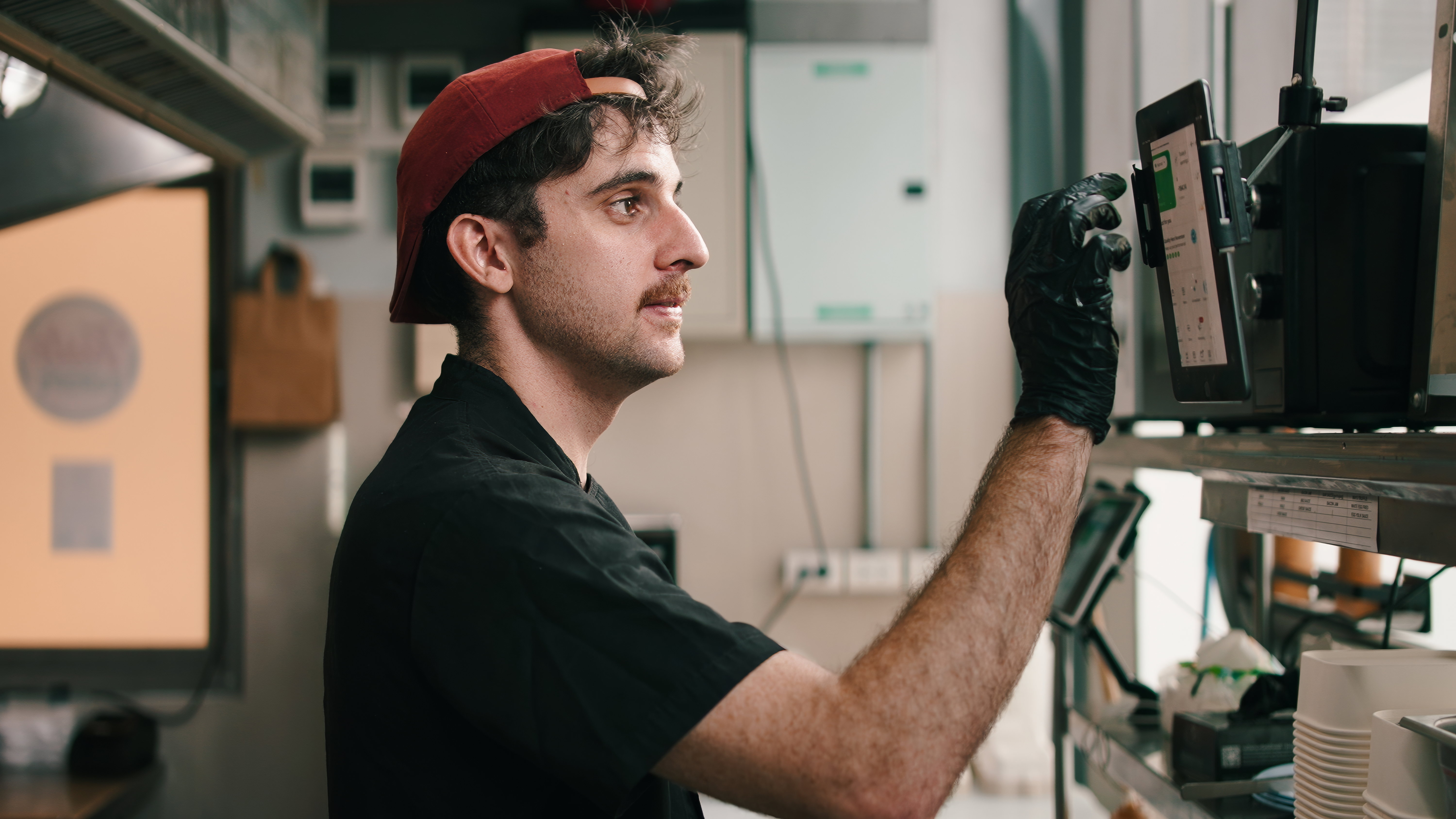
Many restaurant owners focus heavily on sales numbers, but sometimes the real damage happens quietly inside the operation. From what I observe, restaurants usually notice rising meat or oil prices immediately. But they often miss:
- overproduction,
- poor prep planning,
- inefficient staff scheduling,
- unnecessary menu size,
- inventory mistakes,
- low-margin items,
- or food waste happening every single day.
According to the FAO, nearly one-third of food produced globally is wasted [2].
In restaurants, a big part of this waste comes from operational inefficiencies rather than customers leaving food on tables. In my opinion, this is one of the biggest reasons why some restaurants survive difficult periods while others struggle badly. Some operators only react to problems.
Others measure problems before they become dangerous. That difference matters a lot.
More Sales Does Not Automatically Mean More Profit
This is another thing many restaurants still underestimate. Especially with delivery platforms. Yes, online delivery continues growing globally [3].
But at the same time, many restaurants are losing margin through:
- aggregator commissions,
- discounts,
- packaging costs,
- refund issues,
- campaign dependency,
- and slower kitchen flow during peak hours.
Sometimes restaurants become extremely busy but financially unhealthy at the same time. I think this is becoming more common than many people realize. Personally, I believe delivery should be managed almost like a separate business model. Because dine-in and delivery do not always create the same operational pressure or profitability structure.
Smaller Menus Are Becoming Smarter
Years ago, many restaurants believed bigger menus meant bigger opportunity. Now I see many successful brands doing the opposite. Smaller menus often create:
- better consistency,
- faster kitchen flow,
- easier staff training,
- lower waste,
- and stronger inventory control.

And honestly, customers usually remember consistency more than variety. I remember seeing restaurants reduce menu size significantly and surprisingly improve both kitchen performance and guest satisfaction within a relatively short time.
Research published in the International Journal of Hospitality Management also shows that excessive menu complexity can negatively affect efficiency and service quality [4].
Sometimes trying to sell everything creates more operational chaos than profit.
Restaurants Are Slowly Becoming Data Businesses
I think modern restaurants are no longer only food businesses. They are operational data businesses too.
The operators who survive difficult economic conditions are usually the ones who understand their numbers early enough:
- food cost,
- labor cost,
- prime cost,
- contribution margin,
- break-even point,
- waste percentage,
- sales behavior,
- and productivity trends.
Many restaurants do not fail because the food is bad. Most of the time, problems become visible too late. And once margins are damaged for months, recovery becomes very difficult.
This is exactly why KPI tracking and operational analysis are becoming much more important today compared to 10 years ago. Even AI tools are now helping restaurants with:
- demand forecasting,
- inventory management,
- labor scheduling,
- and customer behavior analysis [5].
I do not think AI will replace good restaurant managers anytime soon. But I definitely think managers using better data will replace managers who completely ignore it.
Final Thoughts
Personally, I think the era of solving every problem by simply increasing prices is slowly ending. The restaurants surviving the next 5–10 years will probably not just be the biggest ones.
They will be the operators who:
- control waste better,
- understand their numbers earlier,
- simplify operations,
- build smarter systems,
- and stay operationally disciplined.
Good food will always matter, of course. But today, operational intelligence matters just as much.
References [1]
U.S. Bureau of Labor Statistics – Consumer Price Index Reports [2]
Food and Agriculture Organization (FAO) – Food Waste Index [3]
Statista – Online Food Delivery Market [4]
International Journal of Hospitality Management [5]
McKinsey & Company – AI in Food Service Operations
Written by Semih Suren